
Hide
Fenton
hide
Hide
hide
Hide
hide
Hide
Hide
hide
Hide
Hide

- The parish was in the Claypole sub-district of the Newark Registration District.
- Check our Census Resource page for county-wide resources.
- The table below gives census piece numbers, where known:
Census
YearPiece No. 1841 H.O. 107 / 618 1851 H.O. 107 / 2120 1861 R.G. 9 / 2482 1891 R.G. 12 / 2716
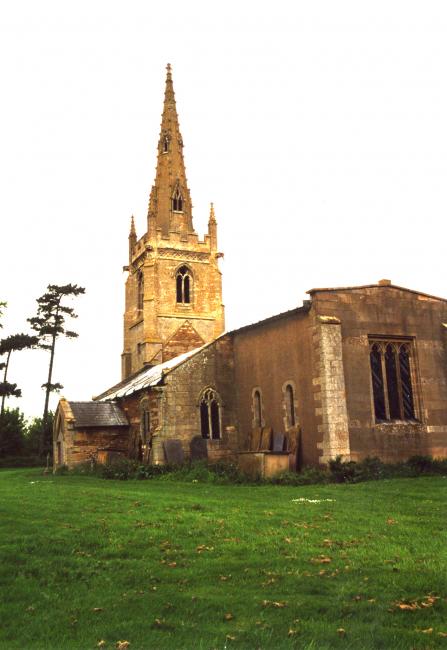
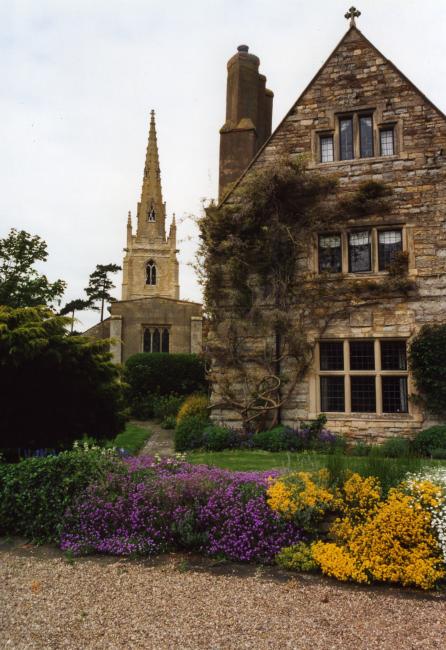
- The Anglican parish church is dedicated to All Saints.
- The church dates back to the 14th century.
- The church chancel was rebuilt in 1830.
- The building was thoroughly restored in 1875.
- The church seats 150 persons.
- A photograph of All Saints is at the Wendy PARKINSON English Church Photographs site.
- Here are 2 photos of All Saints Church, taken by Ron COLE (who retains the copyright):
- The parish register dates from 1537 and the Bishop's transcripts start in 1544.
- The Lincolnshire FHS has a Loan Library service which has the parish registers on microfiche for Baptisms from 1544 to 1812 and Marriages from 1538 to 1809.
- The LFHS has published several marriage indexes for the Loveden Deanery to make your search easier.
- Check our Church Records page for county-wide resources.
- The parish was in the Claypole sub-district of the Newark Registration District.
- Check our Civil Registration page for sources and background on Civil Registration which began in July, 1837.
Fenton is a parish and village just 6 miles ESE of Newark on Trent and 3 miles due south of Beckingham parish. Stubton parish lies to the south. The parish covers about 1,230 acres of low, marshy land.
Note: There is a hamlet of Fenton in Kettlethorpe parish near Gainsborough.
The small village of Fenton lies between two small tributaries that drain into the River Witham. If you are planning a visit:
- Take the A17 trunk road east out of Newark or west from Sleaford. Turn south at Beckingham.
- Mind the ducks as you pass through the village.
- Bob DANYLEC has a nice photograph of the Village Duck Pond on Geo-graph, taken in November, 2005.
- Visit our touring page for more sources.
- Ask for a calculation of the distance from Fenton to another place.
- Check the history of the Wapentake at the Loveden Wapentake website.
- The principal landowners in 1871 were Richard LUCAS, Sir Richard FREDERICK, baronet, Mr. Henry GILBERT and the Rev. George MARSLAND.
- In 1913, Stafford Vere HOTCHKIN of Woodhall Spa and Col. Henry William LOWRY-CORRY of Suffolk were the principal landowners.
- Fenton Hall was built in 1507 as the seat of the LUCAS family. It partially burnt down about 1771 and its remains converted into a farm house, occupied by the THURLBY family in the late 1800's and by the CODD family in the early 1900's.
- See our Maps page for additional resources.
You can see maps centred on OS grid reference SK879508 (Lat/Lon: 53.046838, -0.689993), Fenton which are provided by:
- OpenStreetMap
- Google Maps
- StreetMap (Current Ordnance Survey maps)
- Bing (was Multimap)
- Old Maps Online
- National Library of Scotland (Old Ordnance Survey maps)
- Vision of Britain (Click "Historical units & statistics" for administrative areas.)
- English Jurisdictions in 1851 (Unfortunately the LDS have removed the facility to enable us to specify a starting location, you will need to search yourself on their map.)
- Magic (Geographic information) (Click + on map if it doesn't show)
- GeoHack (Links to on-line maps and location specific services.)
- All places within the same township/parish shown on an Openstreetmap map.
- Nearby townships/parishes shown on an Openstreetmap map.
- Nearby places shown on an Openstreetmap map.
- The name Fenton is from the Old English fenn+tun, or "farmstead in a fen or marsh". In 1212, the village is name is given as Fentun.
[A. D. Mills, "A Dictionary of English Place-Names," Oxford University Press, 1991]
Here are the surnames found in White's 1872 Directory of Lincolnshire:
HALL, JENKINSON, MARSLAND, RIPLEY, ROSS, WILKINSON and THURLBY.
Here's a partial list of surnames found in Kelly's 1913 Directory:
CODD, COUSINS, PICKETT.
- This place was an ancient Chapelry in Lincoln county and became a modern Civil Parish shortly after those were established.
- The parish was in the ancient Loveden Wapentake in the South Kesteven division of the county, in the parts of Kesteven.
- The citizens of this small parish have elected to forgo a formal Parish Council and instead have periodic Parish Meetings to discuss civic and political issues.
- For today's district governance, contact the South Kesteven District Council.
- Bastardy cases would be heard in the Spittlegate petty session hearings.
- In the 1800s, Mrs. LUCAS left the interest on £150 with the church to be distributed in coal to the poor of the parish.
- The "Blackmiles" charity, left by an anonymous donor, also contributed to the poor of the parish.
- After the Poor Law Amendment Act reforms of 1834, the parish became part of the Newark Poor Law Union.
- There is no record of a school being built at Fenton.
- For more on researching school records, see our Schools Research page.