
Hide
Morton (by Bourne)
hide
Hide
hide
Hide
hide
Hide
Hide
hide
Hide
Hide

The Library at Bourne should prove useful in your research.
The Library at Spalding will also prove useful in your research.
Tim HEATON has a nice photograph of the churchyard of St. John's on Geo-graph, taken in August, 2013.
- The parish was in the Bourne sub-district of the Bourne Registration District.
- In a 1931 re-organization, this parish was reassigned to the South Kesteven Registration District.
- Check our Census Resource page for county-wide resources.
- The table below gives census piece numbers, where known:
| Census Year | Piece No. |
|---|---|
| 1841 | H.O. 107 / 620 |
| 1851 | H.O. 107 / 2095 |
| 1861 | R.G. 9 / 2317 |
| 1871 | R.G. 10 / 3314 |
| 1891 | R.G. 12 / 2557 |
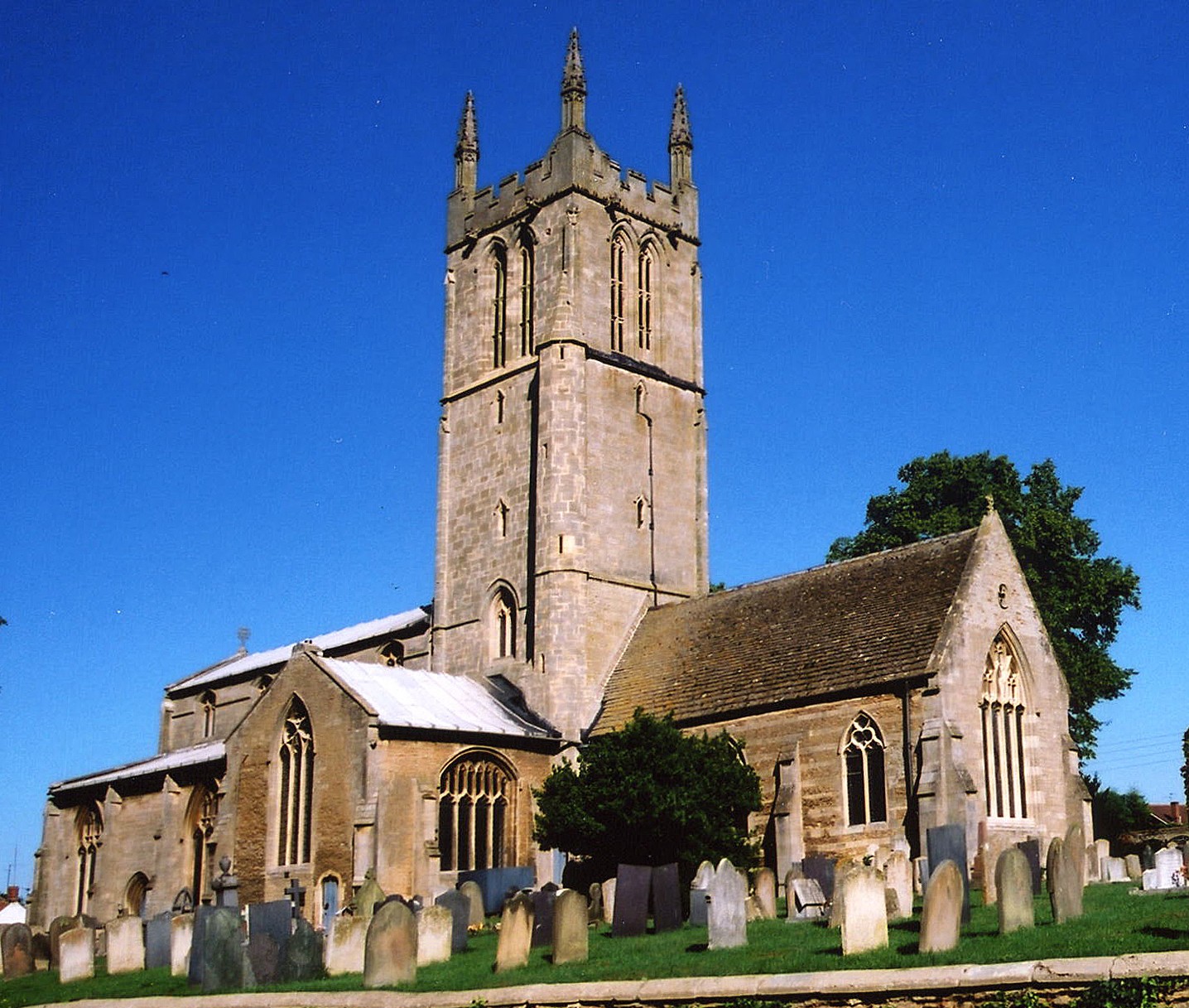
- The Anglican parish church is dedicated to Saint John the Baptist.
- The church was restored in 1860.
- The church seats 400.
- The church is Grade I listed with English Heritage.
- Alan MURRAY-RUST has a photograph of St. John's Church on Geo-graph, taken in January, 2008.
- Here is a photograph of St. John the Baptist's Church, taken by Ron COLE (who retains the copyright):
- The parish registers go back to 1549, but the Bishop's transcripts go back to 1541.
- The parish lies in the Aveland & Ness Deanery. You may wish to purchase some of the Deanery marriage indexes to make your search easier.
- The foundation stone was laid in 1875 for a Wesleyan Methodist chapel in Morton. There is no graveyard attached. That chapel closed in 1967.
- There was a Baptist chapel, too, replaced in 1876.
- Alan MURRAY-RUST has a photograph of the New Day Baptist Church on Geo-graph, taken in January, 2008.
- For information and assistance in researching these chapels, see our non-conformist religions page.
- Check our Church Records page for county-wide resources.
- The parish was in the Bourne sub-district of the Bourne Registration District.
- In a 1931 re-organization, this parish was reassigned to the South Kesteven Registration District.
- Check our Civil Registration page for sources and background on Civil Registration which started in July, 1837.
Morton by Bourne is both a village and parish about 2 miles north of Bourne and 97 miles north of London. The parish includes the hamlet of Hanthorpe (also called Harmthorpe). Hacconby parish lies to the north. The parish covers about 4,850 acres of land that is typical Fenland marsh.
The A15 trunk road (the old Roman Road) runs through the west end of the village. The village was, in the 19th century, supplied with water from artesian wells. The River Glen flows southward just outside the eastern edge of the village. If you are planning a visit:
- The Delane Bus Company provides local passenger bus transport from Bourne and Peterborough.
- Passenger service on the old Bourne to Sleaford railway line ceased in 1959. The tracks have been torn up and the old railway line is now a hiking path.
- Kieth EVANS has a photograph of an old Milestone on Geo-graph, taken in March, 2012.
- Rex NEEDLE has a photograph of the Village Hall on Geo-graph, taken in September, 2000. Stop in and ask for a schedule of forth-coming events.
- Visit our touring page for more sources.
- Ask for a calculation of the distance from Morton (by Bourne) to another place.
- Wikipedia tells us that: "The village is in two parts, one each side of the fen-edge road, the A15. To the fenward side is Morton and to the upland side is Hanthorpe."
- The parish was once a station stop on the Great Northern Railway.
- Rex NEEDLE has a phtograph of the Five Bells public house on Geo-graph, taken in September, 2001.
- Richard CROFT has a photograph of the fire-gutted King's Head P. H. on Geo-graph, taken in September, 2008.
- The King's Head Public House was (and still is) a popular spot for swapping local news. Here are the proprietors shown in various Directories:
| Year | Person |
|---|---|
| 1842 | James ANDREW, vict. |
| 1868 | William BAXTER |
| 1872 | William BAXTER, vict. |
| 1882 | William BAXTER, vict. |
| 1900 | Walter BELL |
| 1913 | George DIBBEN |
| 1930 | William E. PARKER |
- See our Maps page for additional resources.
You can see maps centred on OS grid reference TF098240 (Lat/Lon: 52.802391, -0.372746), Morton (by Bourne) which are provided by:
- OpenStreetMap
- Google Maps
- StreetMap (Current Ordnance Survey maps)
- Bing (was Multimap)
- Old Maps Online
- National Library of Scotland (Old Ordnance Survey maps)
- Vision of Britain (Click "Historical units & statistics" for administrative areas.)
- English Jurisdictions in 1851 (Unfortunately the LDS have removed the facility to enable us to specify a starting location, you will need to search yourself on their map.)
- Magic (Geographic information) (Click + on map if it doesn't show)
- GeoHack (Links to on-line maps and location specific services.)
- All places within the same township/parish shown on an Openstreetmap map.
- Nearby townships/parishes shown on an Openstreetmap map.
- Nearby places shown on an Openstreetmap map.
- Bob HARVEY has a photograph of the War Memorial in the churchyard on Geo-graph, taken in May, 2014.
- During World War II, Hanthorpe House was requisitioned by the government as a Prisoner of War camp for Italian prisoners. Later, the camp was used for German prisoners.
- In 1930 Major Thomas KELSEY was a resident of this parish, living in Southlands House. In August 1886 he had been appointed as a Leiutenent to the 1st Volunteer battalion of the Lincolnshire Regiment. He died in 1941.
- Michael PECK provides: "The Morton (by Bourne) War Memorial has now been recorded. It is for WW1 only and consists of 2 parts, a memorial 'proper' in the church grounds which shows no names and a plaque which actually names the men (specifically states Morton and Hanthorpe) inside the church. The names recorded are:"
WW1:
|
|
There is also this burial in the churchyard:
- Albert Edward WHITETHREAD, priv., 88th training batln., age 35, died 15 June 1917.
- The name Morton is from the Old English Mor+tun, or "Farmstead on the moor or marsh". In the 1086 Domesday Book, the village is given as Mortun.
["A Dictionary of English Place-Names," A. D. Mills, Oxford University Press, 1991]
- This place was an ancient Civil Parish on when those were formed.
- The parish was in the ancient Aveland Wapentake in the South Kesteven district in the parts of Kesteven. It was part of the Bourne Union and County Court district.
- Some time in the 20th century, the parish was renamed as "Morton and Hanthorpe".
- For today's district governance, contact the South Kesteven District Council.
- Bastardy cases would be heard in the Bourne petty session hearings on Mondays.
- Care of the parish poor dates back to 1716 when Rebecca LEABAND bequeathed some land for the education of the children of the poor.
- The Common Lands were enclosed here in 1771.
- In 1795, Henry ABEL, Esq., of Greenwich Hospital left a provision for providing bread and fuel for the poor.
- In 1820, Thomas HOGARD left the rent from three acres for the poor.
- After the Poor Law Amendment Act of 1834, the parish became part of the Bourne Poor Law Union.
Year Inhabitants 1801 603 1831 842 1841 952 1851 938 1871 973 1881 950 1891 899 1901 794 1911 839 1921 790 1931 877
- A National School was built here prior to 1871 to hold 200 children.
- For more on researching school records, see our Schools Research page.