
Hide
Snelland
hide
Hide
hide
Hide
hide
Hide
Hide
Hide

- The parish was in the North-East sub-district of the Lincoln Registration District.
- Check our Census Resource page for county-wide resources.
- The table below gives census piece numbers, where known:
| Census Year | Piece No. |
|---|---|
| 1841 | H.O. 107 / 644 |
| 1861 | R.G. 9 / 2363 |
| 1871 | R.G. 10 / 3376 |
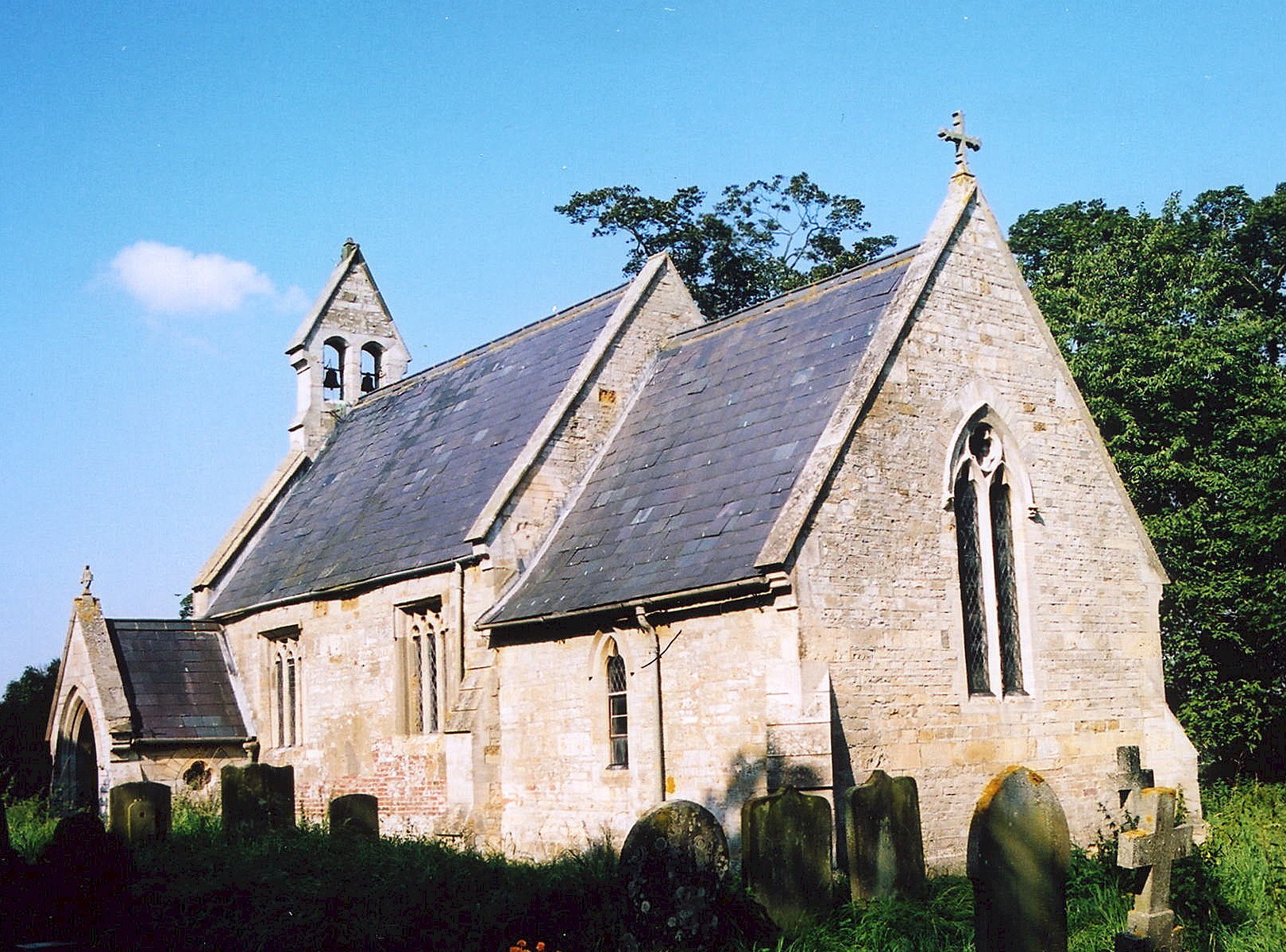
- The Anglican parish church is dedicated to All Saints.
- The church was restored in 1802.
- The church was restored again in 1862 and underwent some alterations in 1870.
- The church seats 80.
- Here is a photo of All Saints Church, taken by Ron COLE (who retains the copyright):
- The Anglican parish register dates from 1653.
- The Lincolnshire FHS has published several marriage indexes for the Westwold Deanery to make your search easier.
- Kelly's 1913 Directory of Lincolnshire places the parish in the West Walshcroft rural deanery.
- Check our Church Records page for county-wide resources.
- The parish was in the North-East sub-district of the Lincoln Registration District.
- Check our Civil Registration page for sources and background on Civil Registration which began in July, 1837.
Snelland is both a village and a parish in the Wolds, 139 miles north of London, 9 miles northeast of the city of Lincoln and 5 miles south of Market Rasen. Wickenby parish lies to the north and Dunholme parish to the west. The hamlet of Swinethorpe lies in this parish. The parish covers about 1,460 acres.
If you are planning a visit:
- See our touring page for more sources.
- Ask for a calculation of the distance from Snelland to another place.
- In 1841, two bridges were constructed to cross the channel that passes through the parish.
- The parish had a railway station on the Manchester, Sheffield and Lincolnshire line.
- See our Maps page for additional resources.
You can see maps centred on OS grid reference TF077807 (Lat/Lon: 53.312057, -0.384693), Snelland which are provided by:
- OpenStreetMap
- Google Maps
- StreetMap (Current Ordnance Survey maps)
- Bing (was Multimap)
- Old Maps Online
- National Library of Scotland (Old Ordnance Survey maps)
- Vision of Britain (Click "Historical units & statistics" for administrative areas.)
- English Jurisdictions in 1851 (Unfortunately the LDS have removed the facility to enable us to specify a starting location, you will need to search yourself on their map.)
- Magic (Geographic information) (Click + on map if it doesn't show)
- GeoHack (Links to on-line maps and location specific services.)
- All places within the same township/parish shown on an Openstreetmap map.
- Nearby townships/parishes shown on an Openstreetmap map.
- Nearby places shown on an Openstreetmap map.
- The name Snelland is from the Old Scandinavian Snjallr+lundr, or "Snjallr's grove". In the 1086 Domesday Book, the village is given as Sneleslunt.
[A. D. Mills, "A Dictionary of English Place-Names," Oxford University Press, 1991].
- The parish was in the western division of the ancient Wraggoe Wapentake in the West Lindsey district in the parts of Lindsey.
- Kelly's 1900 Directory of Lincolnshire places this parish, perhaps erroneously, in the East Lindsey district of the county.
- Today's district governance is provided by the West Lindsey District Council.
- Bastardy cases would be heard in the Wragby petty session hearings.
- As a result of the 1834 Poor Law Amendment Act, the parish became part of the Lincoln Poor Law Union.
- Mr. H. C. CUST gave the parish 14 shillings each year for the poor. He also allowed the parish a blue coat every other year for a poor man and 35 shillings per year for three poor men.
- The first school was built here in 1842 by Lord BROWNLOW. It was rebuilt in 1879. It sits near Wickenby parish and Wickenby students attended here also.
- For more on researching school records, see our Schools Research page.